The Ultimate Guide to Choosing the Right Data Management Software for Your Business
In today’s hyper-connected and data-driven world, businesses of all sizes are realizing the profound impact of effectively managing their information assets. Without robust data management practices, organizations risk losing valuable insights, compromising security, and hindering their ability to make informed strategic decisions. This comprehensive guide aims to equip businesses with the knowledge and confidence needed to navigate the complex landscape of data management software and select solutions that truly align with their unique needs and objectives.
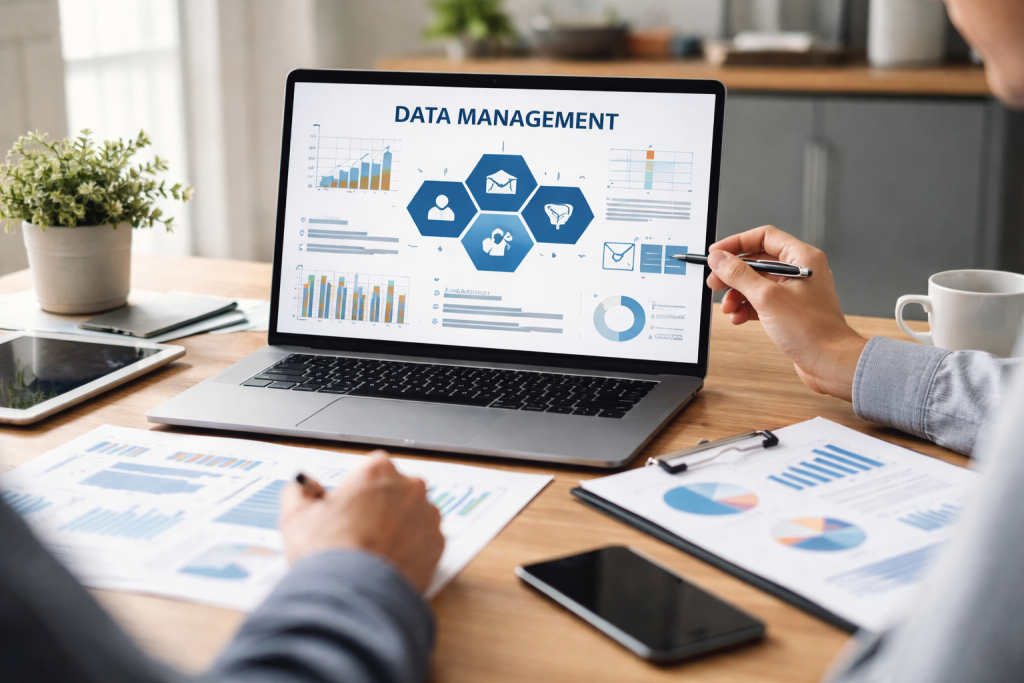
Data is no longer just a byproduct of business operations; it’s a critical strategic asset. The sheer volume, velocity, and variety of data generated today necessitate a structured and systematic approach to its collection, storage, organization, security, and accessibility. Data management software acts as the central nervous system for this critical function, offering a powerful array of tools and capabilities that transform raw data into actionable intelligence.
The importance of robust data management software is multifaceted. Firstly, it ensures data integrity and accuracy, preventing costly errors and misunderstandings that can arise from inconsistent or unreliable information. High-quality data is the bedrock of sound decision-making, analytical insights, and effective operational execution. Secondly, it enhances data security and compliance. With the ever-increasing threat of cyberattacks and evolving data privacy regulations like GDPR and CCPA, ensuring the confidentiality, integrity, and availability of sensitive data is paramount. Data management software provides the necessary controls and auditing capabilities to meet these stringent requirements. Thirdly, it improves operational efficiency. By centralizing data, automating repetitive tasks, and providing easy access to relevant information, businesses can streamline workflows, reduce manual effort, and onboard new employees more effectively. This directly translates into cost savings and increased productivity. Finally, and perhaps most importantly, effective data management unlocks the potential for innovation and competitive advantage. By leveraging data analytics and business intelligence tools, businesses can identify trends, understand customer behavior, optimize processes, and discover new opportunities that competitors may overlook.
Contents
- 0.1 The Risks of Poor Data Management
- 0.2 The Foundation for Data-Driven Success
- 0.3 Understanding Your Business Needs and Objectives
- 0.4 Scalability and Future Growth
- 0.5 Integration Capabilities
- 0.6 User-Friendliness and Ease of Use
- 0.7 Security and Compliance Features
- 0.8 Database Management Systems (DBMS)
- 0.9 Data Warehousing Solutions
- 0.10 Data Governance and Master Data Management (MDM) Tools
- 0.11 Data Integration and ETL Tools
- 0.12 Big Data Platforms and Analytics Software
- 0.13 Core Data Storage and Organization Capabilities
- 0.14 Data Security and Access Control Features
- 0.15 Integration and API Support
- 0.16 Performance and Scalability Options
- 0.17 Advanced Analytics and Reporting Tools
- 0.18 Vendor Support and Community
- 0.19 The Importance of a Unified Data Ecosystem
- 0.20 API-Driven Integration Strategies
- 0.21 ETL/ELT Processes for Data Consolidation
- 0.22 Data Synchronization and Real-Time Updates
- 0.23 Avoiding Data Duplication and Ensuring Data Consistency
- 0.24 Understanding the Pricing Models
- 0.25 Initial Software Purchase or Subscription Costs
- 0.26 Implementation and Customization Expenses
- 0.27 Training and Ongoing Support Fees
- 0.28 Infrastructure and Hardware Costs (for On-Premises Solutions)
- 0.29 Total Cost of Ownership (TCO) Analysis
- 0.30 Establish Clear Data Governance Policies and Procedures
- 0.31 Phased Implementation and Pilot Programs
- 0.32 Comprehensive User Training and Ongoing Support
- 0.33 Regular Data Audits and Quality Checks
- 0.34 Foster a Data-Driven Culture
- 0.35 Continuous Monitoring and Optimization
- 1 FAQs
- 1.1 1. What is data management software and why is it important for businesses?
- 1.2 2. What are the key factors to consider when choosing data management software for a business?
- 1.3 3. What types of data management software are available for businesses?
- 1.4 4. How can businesses compare the features and functionality of different data management software options?
- 1.5 5. What are the best practices for implementing and utilizing data management software in a business?
The Risks of Poor Data Management
Businesses that neglect proper data management practices often face a cascade of negative consequences. Data silos, where information is scattered across disparate systems with no interconnectivity, lead to incomplete views of customers and operations. This lack of visibility hinders cross-functional collaboration and decision-making. Furthermore, poor data quality can result in inaccurate reports, flawed analyses, and ultimately, misguided business strategies. The consequences can range from missed sales opportunities to costly operational inefficiencies. Security breaches, a direct result of inadequate data protection measures, can lead to reputational damage, significant financial penalties, and loss of customer trust. Compliance failures, stemming from a lack of oversight and control over data handling, can result in hefty fines and legal repercussions, significantly impacting a business’s bottom line and long-term viability.
The Foundation for Data-Driven Success
Ultimately, data management software is not merely a tool for organizing information; it is a strategic enabler. It provides the essential infrastructure for businesses to become truly data-driven, transforming raw data into a valuable commodity that fuels growth, innovation, and sustained competitive advantage in an increasingly complex marketplace.
Selecting the right data management software is a critical decision that requires careful consideration of several key factors. A hasty choice can lead to wasted resources, operational disruptions, and a solution that fails to meet the evolving needs of the business. A thorough assessment of these factors will pave the way for a successful implementation and long-term value.
Understanding Your Business Needs and Objectives
Before even looking at specific software solutions, it is imperative to clearly define your business’s current needs and future objectives. What specific problems are you trying to solve with data management software? Are you struggling with data quality, security, accessibility, or a combination of these? What are your long-term goals related to data analytics, customer insights, or operational efficiency? Identifying these core requirements will act as a compass, guiding your selection process and ensuring that the chosen software directly addresses your most pressing challenges and aspirations.
Scalability and Future Growth
The business landscape is dynamic, and your data management solution must be able to grow alongside your organization. Consider the potential for increased data volumes, user numbers, and the introduction of new data sources or analytical needs in the future. The software should offer scalability options, allowing you to expand its capabilities and capacity without requiring a complete system overhaul. This forward-thinking approach prevents the need for costly replacements down the line and ensures that your data management infrastructure remains relevant and effective as your business evolves.
Integration Capabilities
In today’s interconnected business environment, your data management software will likely need to interact with other existing systems. Think about your current technology stack, including CRM, ERP, marketing automation platforms, and business intelligence tools. The chosen software should offer robust integration capabilities, ideally through APIs or pre-built connectors, to ensure seamless data flow between systems. This reduces manual data entry, minimizes the risk of errors, and provides a unified view of your business operations. Poor integration can lead to data silos and inefficient workflows, negating many of the benefits of data management.
User-Friendliness and Ease of Use
Implementing new software can be a significant undertaking, and widespread adoption is crucial for its success. The user interface should be intuitive and easy to navigate, even for employees without extensive technical expertise. Consider the training requirements and the learning curve associated with the software. A user-friendly solution will accelerate adoption, reduce frustration, and empower more employees to leverage the data effectively, thereby maximizing the return on your investment.
Security and Compliance Features
Data security and regulatory compliance are non-negotiable. The software must offer robust security features, such as encryption, access controls, audit trails, and regular data backups. Research the vendor’s security protocols and their commitment to data privacy. Ensure that the software helps your organization comply with relevant industry regulations and data protection laws. Failure to prioritize these aspects can expose your business to significant risks.
The market for data management software is diverse, offering a range of solutions tailored to different business needs and complexities. Understanding these categories will help you narrow down your search and identify the types of software that best fit your organization’s specific requirements.
Database Management Systems (DBMS)
At the foundational level, database management systems are designed for storing, retrieving, and managing structured data. They provide the infrastructure upon which many other data-related applications are built. Common examples include relational database management systems (RDBMS) like MySQL, PostgreSQL, and SQL Server, which organize data into tables with predefined relationships. NoSQL databases, such as MongoDB and Cassandra, offer more flexibility for unstructured or semi-structured data and are often chosen for their scalability and performance in specific use cases.
Data Warehousing Solutions
Data warehouses are specialized systems designed for storing and analyzing large volumes of historical data from various sources. They are optimized for reporting and analytical queries, allowing businesses to gain deep insights into trends and patterns. These solutions typically involve Extract, Transform, Load (ETL) processes to consolidate data from operational systems into a central repository for business intelligence and decision-making. Cloud-based data warehousing services, like Amazon Redshift and Google BigQuery, have become increasingly popular for their scalability and cost-effectiveness.
Data Governance and Master Data Management (MDM) Tools
Data governance refers to the overall management of data availability, usability, integrity, and security within an enterprise. Master Data Management (MDM) specifically focuses on creating and maintaining a single, consistent, and authoritative view of core business entities, such as customers, products, and suppliers. MDM tools help eliminate data duplication and inconsistencies across different systems, ensuring that all departments are working with the same accurate information. This is crucial for maintaining data quality and enabling reliable reporting.
Data Integration and ETL Tools
Data integration tools are essential for consolidating data from disparate sources into a unified dataset. Extract, Transform, Load (ETL) tools are a common type of data integration software that automates the process of extracting data from source systems, transforming it into a consistent format, and loading it into a target repository, such as a data warehouse. These tools are critical for ensuring that data from different applications can be combined and analyzed effectively.
Big Data Platforms and Analytics Software
For businesses dealing with massive datasets that exceed the capacity of traditional databases, big data platforms offer specialized solutions. These platforms, often built on technologies like Hadoop and Spark, are designed to store, process, and analyze vast amounts of structured, semi-structured, and unstructured data. Accompanying analytics software leverages these platforms to perform advanced analytics, machine learning, and artificial intelligence tasks, unlocking deeper insights and predictive capabilities.
Once you have a clear understanding of your needs and the types of software available, the next crucial step is to compare specific features and functionalities. This comparative analysis will help you identify the solution that offers the best fit for your organization’s unique requirements and budget. Don’t just look at the flashy features; prioritize those that directly contribute to solving your core data management challenges.
Core Data Storage and Organization Capabilities
Examine how each software solution handles data storage. Consider the types of data it can manage (structured, semi-structured, unstructured), the data models it supports (relational, document, key-value, etc.), and its capacity for handling large volumes of data. Look for features like data indexing, partitioning, and replication, which are crucial for performance and availability. The ability to organize data in a logical and searchable manner is fundamental for efficient retrieval.
Data Security and Access Control Features
Evaluate the comprehensive suite of security features offered. This includes encryption at rest and in transit, granular access control mechanisms that allow you to define user roles and permissions, and auditing capabilities to track who accessed what data and when. Robust security safeguards are essential for protecting sensitive information and meeting compliance obligations. The software should also support multi-factor authentication for an added layer of security.
Integration and API Support
Assess the ease with which the software can integrate with your existing systems. Look for well-documented APIs (Application Programming Interfaces) that allow for custom integrations and readily available connectors for popular business applications. A strong integration framework will minimize manual effort, reduce the risk of data errors, and enable a cohesive data ecosystem across your organization.
Performance and Scalability Options
Consider the software’s performance characteristics, particularly its ability to handle your expected data volumes and query loads. Inquire about its scalability options – can it easily handle growth in data storage and user access? Cloud-based solutions often offer inherent scalability, while on-premises solutions may require hardware upgrades. Performance benchmarks and case studies can provide valuable insights.
Advanced Analytics and Reporting Tools
Beyond basic data storage, explore the built-in analytics and reporting capabilities. Does the software offer tools for data visualization, dashboard creation, and basic reporting? For more advanced needs, consider whether it seamlessly integrates with dedicated business intelligence (BI) platforms or offers built-in machine learning and AI functionalities. The ability to derive actionable insights from your data is a key objective.
Vendor Support and Community
Don’t underestimate the importance of vendor support. Research the vendor’s reputation for customer service, the availability of technical support (e.g., 24/7 support, knowledge base, community forums), and the quality of documentation. A strong support system can be invaluable during implementation and troubleshooting, ensuring that you can resolve issues quickly and maximize the software’s utility.
Successful implementation of data management software hinges not only on choosing the right solution but also on its seamless integration with your existing business systems. This integration ensures that data flows smoothly across your organization, eliminating silos and providing a unified view of your operations. A well-integrated system maximizes the value of your data and enhances overall efficiency.
The Importance of a Unified Data Ecosystem
Data silos are a common problem in many businesses, where information is fragmented across different applications and departments. This fragmentation hinders collaboration, leads to inconsistent reporting, and prevents a holistic understanding of business performance. Integrating your data management software with existing systems creates a unified data ecosystem, where information is accessible and can be leveraged across the entire organization. This allows for better cross-functional analysis, improved customer relationship management, and more informed strategic decision-making.
API-Driven Integration Strategies
APIs are the backbone of modern system integration. Your chosen data management software should offer robust API support, allowing for programmatic interaction with your other business applications. This enables real-time data synchronization, automated data transfer, and the creation of custom workflows. When evaluating software, investigate the types of APIs offered (REST, SOAP, etc.) and the availability of pre-built connectors for your most critical systems, such as your CRM, ERP, marketing automation tools, and e-commerce platforms.
ETL/ELT Processes for Data Consolidation
For consolidating data from diverse sources into your data management platform, Extract, Transform, Load (ETL) or Extract, Load, Transform (ELT) processes are essential. ETL tools extract data from source systems, clean and transform it into a standardized format, and then load it into your data warehouse or repository. ELT takes a slightly different approach, loading raw data first and then transforming it within the target system. Understanding your data sources and the required transformations will help you select appropriate integration tools or build custom pipelines.
Data Synchronization and Real-Time Updates
Depending on your business needs, real-time data synchronization might be critical. For example, if your sales team needs up-to-the-minute customer information from your CRM in your data management system, you’ll need a solution that supports frequent or real-time data updates. This can often be achieved through event-driven architectures or scheduled data refreshes. Consider the latency acceptable for different data streams within your organization.
Avoiding Data Duplication and Ensuring Data Consistency
A primary goal of integration is to eliminate data duplication and ensure data consistency across all systems. When data is duplicated and inconsistent, it leads to errors, confusion, and mistrust in the data. Master Data Management (MDM) principles and tools play a crucial role here, ensuring that a single, authoritative record for key entities like customers, products, and suppliers is maintained. Collaborative efforts between IT and business units are vital to define these master data elements and enforce consistency.
Investing in data management software is a significant financial decision, and a well-defined budget and understanding of cost components are crucial for a successful acquisition and implementation. Beyond the initial purchase price, it’s important to consider the total cost of ownership (TCO) to ensure long-term financial viability.
Understanding the Pricing Models
Data management software vendors employ various pricing models. Some charge a perpetual license fee, where you pay a one-time cost for the software and then an annual maintenance fee for updates and support. Others offer subscription-based pricing, typically on a monthly or annual basis, which often includes support and updates. Cloud-based solutions are usually priced based on usage, such as the amount of data stored, processed, or the number of users. Public cloud offerings might also include variable costs for underlying infrastructure. Clearly understand which model best fits your budget and usage patterns.
Initial Software Purchase or Subscription Costs
The most apparent cost is the initial outlay for the software itself. This can range from a few thousand dollars for simpler desktop solutions to hundreds of thousands or even millions for enterprise-grade platforms. For subscription models, this represents the recurring cost you will need to budget for. It’s important to factor in whether the pricing is per user, per server, or based on data volume.
Implementation and Customization Expenses
Beyond the software license, significant costs can be associated with implementation. This includes the expense of any external consultants or professional services required for installation, configuration, and customization to meet your specific business needs. If custom development is needed to integrate with existing systems or build specific data workflows, these costs can also be substantial. Planning for these upfront expenses is critical.
Training and Ongoing Support Fees
Effective utilization of data management software requires adequate training for your staff. Factor in the costs of training materials, workshops, or dedicated training sessions. Furthermore, many software licenses include annual maintenance fees for ongoing support, bug fixes, and minor updates. It’s essential to understand what is included in these support packages and if premium support options are necessary.
Infrastructure and Hardware Costs (for On-Premises Solutions)
If you opt for an on-premises data management solution, you’ll need to account for the costs of the necessary hardware, including servers, storage devices, and networking equipment. You will also need to consider ongoing costs related to power consumption, cooling, and physical security for your data center. Cloud-based solutions typically eliminate these upfront hardware expenses but introduce ongoing operational costs for cloud services.
Total Cost of Ownership (TCO) Analysis
To make an informed financial decision, conduct a comprehensive Total Cost of Ownership (TCO) analysis. This goes beyond the initial purchase price to encompass all direct and indirect costs associated with acquiring, implementing, operating, and maintaining the data management software over its expected lifespan. Consider factors like software licensing, hardware, implementation services, training, support, maintenance, and potential upgrade costs. A thorough TCO analysis will provide a realistic picture of the overall financial commitment and help you justify the investment.
The true value of data management software is realized through its effective implementation and ongoing utilization. Adhering to best practices ensures that your investment yields maximum benefits, transforming your data into a strategic asset. It’s not just about having the software; it’s about how you use it.
Establish Clear Data Governance Policies and Procedures
Before and during implementation, establish clear data governance policies and procedures. This includes defining data ownership, data quality standards, data security protocols, and access control rules. Document these policies comprehensively and ensure that all relevant stakeholders understand their roles and responsibilities. A robust data governance framework is the foundation for consistent and reliable data management.
Phased Implementation and Pilot Programs
Instead of attempting a full-scale deployment all at once, consider a phased implementation approach. Start with a pilot program in a specific department or for a particular use case to test the software, identify potential challenges, and gather feedback. This allows for necessary adjustments and refinements before rolling out the solution across the entire organization, minimizing disruption and increasing the likelihood of success.
Comprehensive User Training and Ongoing Support
Invest in comprehensive training for all users who will interact with the data management software. Tailor training programs to different user roles and their specific needs. Provide ongoing support and refresher training as needed. Empower your employees to effectively utilize the software’s features and functionalities, fostering a data-literate culture within your organization.
Regular Data Audits and Quality Checks
Implement a schedule for regular data audits and quality checks. This involves verifying data accuracy, completeness, and consistency. Proactively identify and address data anomalies and discrepancies. Automated data quality rules and monitoring tools can be invaluable in this regard, ensuring that your data remains reliable and trustworthy over time.
Foster a Data-Driven Culture
Encourage a data-driven culture throughout your organization. This means promoting the use of data in decision-making processes at all levels. Share insights derived from the data, celebrate successful data-driven initiatives, and empower employees to leverage data to improve their performance and contribute to the company’s strategic goals. leaders must champion the use of data.
Continuous Monitoring and Optimization
Data management is an ongoing process, not a one-time project. Continuously monitor the performance of your data management software and its impact on your business operations. Gather feedback from users, analyze usage patterns, and identify areas for optimization. Stay informed about new features and updates from the software vendor and evaluate their potential benefits for your organization. By embracing a mindset of continuous improvement, you can ensure that your data management solution remains effective and continues to deliver value.
FAQs
1. What is data management software and why is it important for businesses?
Data management software is a tool that helps businesses organize, store, and retrieve data efficiently. It is important for businesses because it allows them to make informed decisions based on accurate and up-to-date information, improves data security, and enhances overall productivity.
2. What are the key factors to consider when choosing data management software for a business?
Key factors to consider when choosing data management software include the specific needs of the business, scalability, ease of use, integration capabilities with existing systems, data security features, and cost.
3. What types of data management software are available for businesses?
There are various types of data management software available for businesses, including database management systems (DBMS), data integration software, data quality software, master data management (MDM) software, and data governance tools.
4. How can businesses compare the features and functionality of different data management software options?
Businesses can compare the features and functionality of different data management software options by creating a list of their specific requirements, conducting thorough research, requesting demos or trials, and seeking feedback from other businesses using similar software.
5. What are the best practices for implementing and utilizing data management software in a business?
Best practices for implementing and utilizing data management software in a business include defining clear objectives, providing adequate training for employees, establishing data governance policies, regularly updating and maintaining the software, and continuously evaluating its performance to ensure it meets the business needs.
Welcome to The Tech Instruct, your trusted platform for simple, practical, and beginner-friendly technology learning.