
The Rise of Automation: How Technology is Changing the Way We Work
The relentless march of technology has consistently reshaped human civilization, and nowhere is this more evident than in the workplace. We are currently experiencing a paradigm shift driven by the rapid ascent of automation, a force that is fundamentally altering how we perceive labor, productivity, and economic structures. This transformative wave, far from being a distant prospect, is an everyday reality, influencing everything from manufacturing floors to customer service centers.
The concept of automation is not new. Throughout history, humans have striven to find ways to make tasks easier, faster, and more efficient. Early forms of automation can be traced back to ancient mechanisms like watermills and windmills, which harnessed natural forces to perform laborious tasks. The Industrial Revolution marked a pivotal moment, introducing machinery that could perform repetitive physical tasks with unprecedented speed and scale. This era saw the rise of factories, assembly lines, and a dramatic increase in production capabilities.
Contents
- 0.1 From Mechanization to Digital Transformation
- 0.2 The Interplay of Robotics and Software Automation
- 0.3 Reshaping Traditional Industries
- 0.4 Emerging Opportunities and Skill Demands
- 0.5 Boosting Efficiency and Productivity
- 0.6 Challenges and Ethical Dilemmas
- 0.7 Beyond Rule-Based Automation
- 0.8 Cognitive Automation and Its Applications
- 0.9 Embracing Continuous Learning and Reskilling
- 0.10 Fostering Human-Machine Collaboration
- 0.11 Addressing Job Displacement and Inequality
- 0.12 Ensuring Ethical AI and Data Governance
- 0.13 Strategic Planning and Pilot Programs
- 0.14 Investing in Workforce Development and Communication
- 1 FAQs
- 1.1 1. What is automation and how is it changing the way we work?
- 1.2 2. What are the advantages and disadvantages of automation in the workplace?
- 1.3 3. How is artificial intelligence playing a role in automation?
- 1.4 4. What are the ethical and social implications of automation?
- 1.5 5. What are some strategies for embracing automation in the workplace?
From Mechanization to Digital Transformation
The 20th century brought further advancements, moving beyond simple mechanization to more sophisticated forms of automation. Programmable logic controllers (PLCs) revolutionized manufacturing in the latter half of the century, allowing for greater flexibility and control over automated processes. The advent of computers and subsequently, the internet, ushered in an era of digital automation. Software bots began to handle routine administrative tasks, data entry, and even complex calculations with remarkable accuracy and speed. This digital transformation laid the groundwork for the more advanced forms of automation we witness today.
The Interplay of Robotics and Software Automation
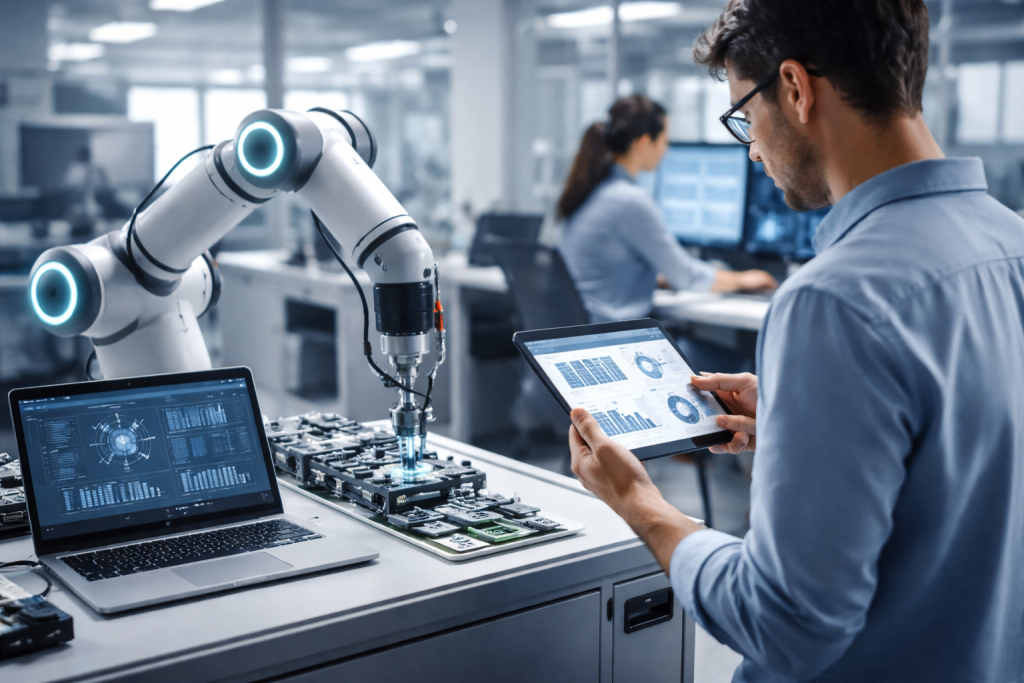
Today’s automation landscape is characterized by a powerful synergy between physical robots and sophisticated software. Robotic arms in factories perform intricate welding, assembly, and packaging tasks with precision far exceeding human capabilities. Beyond the factory floor, robotic process automation (RPA) utilizes software robots to mimic human interactions with digital systems, automating repetitive, rule-based processes in back offices, finance departments, and human resources. This blend of physical and digital automation is what truly differentiates the current wave from previous iterations, creating a pervasive influence across all sectors.
The pervasive nature of automation inevitably leads to significant shifts in the labor market. Certain job roles, particularly those involving highly repetitive, predictable tasks, are highly susceptible to automation. This doesn’t necessarily mean outright job losses, but often a redefinition of responsibilities.
Reshaping Traditional Industries
Manufacturing, historically a stronghold of employment, has been at the forefront of automation. While the image of a fully automated factory might seem futuristic, many elements are already in place, leading to fewer manual labor positions and a greater demand for engineers, technicians, and data analysts to manage and maintain these sophisticated systems. Similarly, agriculture is embracing automated planting, harvesting, and livestock management, potentially increasing yields and efficiency while altering the skill sets required for agricultural work. The transportation sector is on the cusp of a revolution with autonomous vehicles promising to reshape logistics and delivery services, impacting drivers and transportation planners alike.
Emerging Opportunities and Skill Demands
While some jobs may diminish, automation concurrently creates new ones. The development, deployment, maintenance, and oversight of automated systems all require human expertise. This creates a surge in demand for roles such as robotics engineers, AI specialists, data scientists, and automation consultants. Furthermore, roles that require uniquely human skills – critical thinking, creativity, emotional intelligence, complex problem-solving, and interpersonal communication – are becoming increasingly valuable. These are the skills that automation struggles to replicate, making them essential for a future where humans and machines collaborate effectively.
Like any transformative technology, automation presents a duality of benefits and drawbacks that demand careful consideration.
Boosting Efficiency and Productivity
One of the most compelling advantages of automation is its ability to significantly enhance efficiency and productivity. Automated systems can operate 24/7 without fatigue, leading to increased output and faster task completion. They are less prone to human error, resulting in higher quality products and services. Furthermore, automation can handle dangerous and physically demanding tasks, improving workplace safety and reducing the risk of injuries. This frees up human workers to focus on more complex, creative, and strategically important activities, leading to a more engaged and innovative workforce. Cost reduction is another significant driver, as automation can lower labor costs, reduce waste, and optimize resource utilization.
Challenges and Ethical Dilemmas
Despite its benefits, automation presents notable challenges. Job displacement is a primary concern. While new jobs emerge, the transition can be challenging for those whose skills become obsolete, potentially leading to unemployment or underemployment without adequate retraining and support. The initial investment in automation technology can be substantial, making it inaccessible for smaller businesses. Furthermore, over-reliance on automation can lead to a deskilling of the workforce, as workers may lose proficiency in tasks that are now handled by machines. Ethical considerations also arise, particularly regarding data privacy and the potential for algorithmic bias in AI-driven automation. Ensuring equitable access to the benefits of automation and mitigating its negative social impacts are crucial societal challenges.
Artificial Intelligence (AI) is the driving force behind the most sophisticated and transformative forms of modern automation. While traditional automation follows pre-programmed rules, AI introduces a new dimension: intelligence.
Beyond Rule-Based Automation
Whereas Robotic Process Automation (RPA) mimics human actions based on explicit rules, AI-powered automation goes further. Machine learning algorithms allow systems to learn from data, identify patterns, and make predictions or decisions without being explicitly programmed for every scenario. This enables automation of tasks that are less structured and require a degree of cognitive ability, such as natural language processing for customer service chatbots, image recognition for quality control, and predictive analytics for maintenance scheduling.
Cognitive Automation and Its Applications
Cognitive automation, a subset of AI, involves systems that can reason, learn, and interact with humans in more nuanced ways. This includes technologies like natural language generation, which can automatically produce reports and content, and expert systems that can assist human professionals with complex decision-making. The integration of AI allows automation to move beyond repetitive tasks to those requiring judgment and adaptability, opening up new possibilities in fields ranging from healthcare diagnostics to financial fraud detection.
The ongoing advancements in automation are not signaling an end to work, but rather a fundamental transformation of its nature. The future workforce will be characterized by a dynamic interplay between humans and machines.
Embracing Continuous Learning and Reskilling
To thrive in an automated future, individuals and organizations must prioritize continuous learning and reskilling. The skills that were valuable yesterday may not be as pertinent tomorrow. There will be an ongoing need to acquire new technical proficiencies related to AI, data science, and automation tools. Equally important will be the development of “soft skills” such as critical thinking, creativity, emotional intelligence, and collaborative abilities, which are uniquely human and less susceptible to automation. Lifelong learning will become not just an advantage, but a necessity.
Fostering Human-Machine Collaboration
The most successful workplaces of the future will likely be those that effectively integrate humans and automation. Instead of viewing automation as a replacement for human labor, the focus will shift to collaboration. Humans will supervise and optimize automated systems, interpret complex data generated by AI, and handle tasks requiring nuanced social interaction and creative problem-solving. This symbiotic relationship, often referred to as “cobotics” or “augmented intelligence,” leverages the strengths of both humans and machines, leading to enhanced productivity and innovation.
The widespread adoption of automation carries profound ethical and social implications that require careful consideration and proactive policy-making.
Addressing Job Displacement and Inequality
One of the most pressing concerns is the potential for increased economic inequality. If the benefits of automation primarily accrue to a select few, while a significant portion of the workforce struggles to adapt, societal divisions could widen. Governments and educational institutions will need to implement robust social safety nets, retraining programs, and potentially explore new economic models to ensure a just transition for all. Discussions around universal basic income and other social welfare initiatives are gaining traction in anticipation of potential widespread job disruption.
Ensuring Ethical AI and Data Governance
As AI becomes more integrated into automated systems, ensuring its ethical development and deployment is paramount. This includes addressing issues of algorithmic bias, where AI systems can perpetuate or even amplify existing societal prejudices if trained on biased data. Transparency in AI decision-making, accountability for automated systems, and robust data privacy regulations are critical to building public trust and preventing misuse. The development of ethical guidelines and standards for AI will be crucial to harnessing its power responsibly.
For organizations to successfully navigate the automation revolution, a strategic and thoughtful approach is indispensable.
Strategic Planning and Pilot Programs
The first step is to develop a clear automation strategy aligned with overall business objectives. This involves identifying areas where automation can deliver the most value, whether it’s reducing costs, improving efficiency, or enhancing customer experience. Starting with pilot programs in specific departments or processes allows organizations to test the waters, learn from implementation challenges, and demonstrate early successes before scaling up. This iterative approach minimizes risks and fosters an environment of acceptance.
Investing in Workforce Development and Communication
Successful automation is not just about technology; it’s about people. Investing in training and reskilling programs for the existing workforce is crucial. This not only equips employees with the new skills needed to work alongside automation but also demonstrates a commitment to their future, mitigating fears of job displacement. Open and transparent communication with employees throughout the automation journey is vital to build trust, address concerns, and foster a culture of adaptability and innovation. Engaging employees in the automation process, soliciting their feedback, and empowering them to contribute to solution design can lead to more effective and widely accepted implementations. Finally, fostering a culture of continuous learning and experimentation will be key to staying agile and competitive in an increasingly automated world.
FAQs
1. What is automation and how is it changing the way we work?
Automation refers to the use of technology and machines to perform tasks that were previously carried out by humans. It is changing the way we work by streamlining processes, increasing efficiency, and reducing the need for manual labor in certain industries.
2. What are the advantages and disadvantages of automation in the workplace?
Advantages of automation in the workplace include increased productivity, cost savings, and the ability to perform repetitive tasks with precision. Disadvantages may include job displacement, the need for retraining, and potential security risks.
3. How is artificial intelligence playing a role in automation?
Artificial intelligence (AI) is playing a significant role in automation by enabling machines to learn from data, make decisions, and perform tasks that traditionally required human intelligence. This includes applications in areas such as customer service, data analysis, and predictive maintenance.
The ethical and social implications of automation include concerns about job displacement, the impact on income inequality, and the potential for bias in AI decision-making. There are also considerations about the need for retraining and upskilling the workforce to adapt to automation.
5. What are some strategies for embracing automation in the workplace?
Strategies for embracing automation in the workplace include investing in employee training and development, fostering a culture of innovation, and proactively managing the impact of automation on job roles. It also involves considering the ethical implications and ensuring that automation is implemented in a responsible and sustainable manner.

Welcome to The Tech Instruct, your trusted platform for simple, practical, and beginner-friendly technology learning.