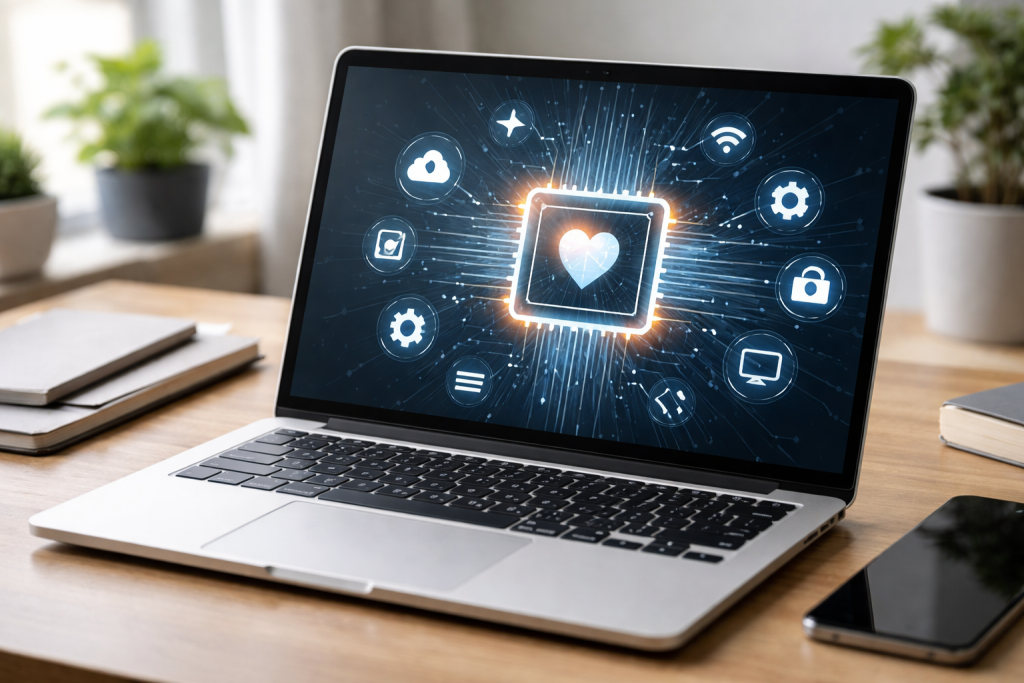
The Heart of Your Device: Exploring the Role of an Operating System
The pulsating core of every digital device you interact with, from the simplest smartwatch to the most intricate supercomputer, is an invisible yet indispensable orchestrator: the operating system. It’s the silent conductor of an elaborate symphony, transforming raw hardware into a functional and intelligent machine. Without it, your powerful processor would be a mere collection of silicon, your vibrant display a static pane of glass. Understanding its fundamental nature, its profound impact, and its relentless evolution is key to appreciating the technological marvels that surround us.
At its essence, an operating system (OS) is the primary software that manages all the hardware and other software resources on a computer. Think of it as the central nervous system, connecting all the disparate parts and ensuring they work in harmony. Its importance cannot be overstated, as it acts as the vital bridge between the human user and the complex machinery.
Contents
- 0.1 Bridging Hardware and Software
- 0.2 Resource Management and Allocation
- 0.3 Providing a User Interface
- 0.4 Process Management
- 0.5 Memory Management
- 0.6 File System Management
- 0.7 Input/Output Device Management
- 0.8 Batch Processing and Early Mainframes
- 0.9 Time-Sharing and Interactive Computing
- 0.10 Graphical User Interfaces and Personal Computing
- 0.11 The Rise of Mobile and Cloud-Based Operating Systems
- 0.12 Access Control and Permissions
- 0.13 Memory Protection and Isolation
- 0.14 Firewall and Network Security Features
- 0.15 Updates and Patch Management
- 0.16 Theming and Appearance Options
- 0.17 Configuration of Settings and Preferences
- 0.18 Application Ecosystems and Integration
- 0.19 Accessibility Features
- 0.20 Device Drivers: The Translators
- 0.21 Interrupts and Event Handling
- 0.22 Direct Memory Access (DMA)
- 0.23 Hardware Abstraction Layer (HAL)
- 0.24 Pervasive AI Integration
- 0.25 Enhanced Security and Privacy
- 0.26 Cloud-Native and Distributed Architectures
- 0.27 Augmented and Virtual Reality Integration
- 0.28 Sustainability and Energy Efficiency
- 1 FAQs
- 1.1 What is an operating system and why is it important for a device?
- 1.2 How does an operating system enhance user experience through customization and personalization?
- 1.3 What is the role of an operating system in device security and protection?
- 1.4 How do operating systems interface with device components and how does it power the device?
- 1.5 What are the trends and developments shaping the next generation of devices in terms of operating systems?
Bridging Hardware and Software
The OS provides an abstract layer above the bare metal hardware, shielding application developers and users from the intricacies of interacting directly with processors, memory, and input/output devices. It translates user commands and application requests into a language the hardware understands, and conversely, interprets hardware responses for the software. This abstraction is crucial for the development of diverse software and the consistent operation of devices.
Resource Management and Allocation
Every device has finite resources: CPU cycles, memory, storage space, and network bandwidth. The OS is responsible for efficiently managing and allocating these resources among multiple running applications and processes. It prevents conflicts, prioritizes tasks, and ensures that each program receives the necessary resources to function correctly, all while maintaining system stability.
Providing a User Interface
While not every OS has a graphical user interface (GUI), a defining characteristic of modern operating systems is their ability to present an intuitive way for users to interact with the device. Whether it’s a command-line interface (CLI) or a visually rich GUI with windows, icons, menus, and pointers (WIMP), the OS provides the means for users to launch applications, manage files, and configure settings.
The inherent power of an operating system lies in its multifaceted functionality, encompassing a wide array of tasks that collectively bring a device to life. These functions are the bedrock upon which all other digital experiences are built.
Process Management
Every application you run, every background service, and even parts of the OS itself, are considered processes. The OS is equipped with sophisticated process management capabilities, including scheduling which processes get CPU time, creating and terminating processes, and managing communication between them. This allows for multitasking, where numerous applications appear to run simultaneously without interfering with each other.
Memory Management
Memory is a critical resource, and the OS manages it meticulously. It allocates memory to running programs, keeps track of memory usage, and reclaims memory when it’s no longer needed. Advanced memory management techniques, such as virtual memory, allow programs to use more memory than is physically available by swapping data between RAM and disk storage.
File System Management
Organizing and storing data is a fundamental requirement for any computing device. The OS provides a file system, a structured way to store, retrieve, and manage files and directories on storage devices like hard drives or SSDs. It handles tasks such as creating, deleting, renaming, and copying files, as well as managing access permissions to ensure data security.
Input/Output Device Management
From your keyboard and mouse to printers and network adapters, the OS manages all input and output devices connected to the system. It handles interrupts from these devices, provides drivers to facilitate communication, and ensures that data flows smoothly between the device and the rest of the system.
The journey of operating systems is a testament to relentless innovation, mirroring the rapid progression of computing itself. From humble beginnings, they have blossomed into sophisticated ecosystems powering our increasingly digital world.
Batch Processing and Early Mainframes
The very first operating systems were rudimentary, primarily designed for batch processing on mainframe computers. These systems would execute jobs sequentially, often requiring human intervention to load programs and data. User interaction was minimal, and efficiency was paramount in utilizing expensive computing time.
Time-Sharing and Interactive Computing
The advent of time-sharing systems allowed multiple users to interact with a single computer seemingly simultaneously. This marked a significant shift towards interactive computing, as the OS would rapidly switch between user tasks, giving each user the impression of having dedicated access. UNIX emerged as a pioneering system in this era, laying the groundwork for many future OS designs.
Graphical User Interfaces and Personal Computing
The 1980s witnessed a revolution with the introduction of graphical user interfaces (GUIs), popularized by Apple’s Macintosh and later Microsoft Windows. These intuitive visual interfaces transformed computing, making it accessible to a much broader audience and fueling the personal computing boom. Users could now interact with computers using icons, menus, and a mouse, rather than memorizing complex commands.
The Rise of Mobile and Cloud-Based Operating Systems
The 21st century brought a new paradigm with the explosion of mobile devices. Operating systems like iOS and Android were specifically designed for touch-based interfaces, power efficiency, and connectivity. Concurrently, cloud computing introduced new operating system architectures often integrated directly into data centers, abstracting away the underlying hardware even further.
Beyond its functional aspects, the operating system plays a critical and often underestimated role in safeguarding your device and the invaluable data it holds. It acts as the first line of defense against malicious attacks and unauthorized access.
Access Control and Permissions
A core security feature of modern operating systems is their robust access control mechanisms. These systems define who can access specific files, folders, and resources, and what actions they are permitted to perform. User accounts, groups, and permissions ensure that sensitive data remains protected and that users only have access to what they need.
Memory Protection and Isolation
The OS employs memory protection techniques to prevent one program from accessing or corrupting the memory space allocated to another program or the operating system itself. This isolation is crucial for system stability and security, as it prevents malicious software from directly manipulating critical system components or stealing data from other applications.
Firewall and Network Security Features
Many operating systems integrate built-in firewall functionalities, controlling incoming and outgoing network traffic based on predefined rules. This acts as a barrier against unauthorized access from external networks. Additionally, the OS often manages network protocols and cryptographic functions that underpin secure communication.
Updates and Patch Management
One of the most vital security aspects is the continuous delivery of operating system updates and patches. These updates often include fixes for newly discovered security vulnerabilities, known as exploits. Regularly updating your OS is paramount for maintaining a secure computing environment and protecting against emerging threats.
Beyond its core functional and security roles, the operating system is increasingly focusing on providing a highly customizable and personalized user experience, allowing individuals to tailor their devices to their unique preferences and workflows.
Theming and Appearance Options
Modern operating systems offer a plethora of visual customization options, from changing desktop backgrounds and screensavers to altering color schemes and icon sets. These thematic elements allow users to express their individuality and create a visually appealing workspace that enhances their comfort and engagement.
Configuration of Settings and Preferences
The OS provides extensive menus and control panels for users to configure a wide range of settings, including language preferences, keyboard layouts, display resolutions, notification behaviors, and privacy settings. This granular control allows users to fine-tune their device to match their specific needs and desires.
Application Ecosystems and Integration
Operating systems, particularly on mobile platforms, foster vibrant application ecosystems through app stores. This allows users to easily discover, download, and install a vast array of software that extends the functionality of their device. The OS also facilitates integration between different applications, enabling seamless workflows and data sharing.
Accessibility Features
An often-overlooked but crucial aspect of personalization is the inclusion of accessibility features. Operating systems are designed to cater to users with diverse needs, offering options such as screen readers for the visually impaired, voice control for those with limited mobility, and customizable text sizes and contrast settings. These features ensure that technology is accessible to everyone.
The operating system acts as the linchpin in a complex symbiotic relationship between hardware and software, orchestrating their interaction to produce a functional device. This intricate dance is fundamental to how any computing system operates.
Device Drivers: The Translators
Central to this interplay are device drivers. These are specialized software programs that allow the operating system to communicate with specific hardware components, such as graphic cards, network adapters, and USB devices. Each driver acts as a translator, understanding the unique language of a particular piece of hardware and converting it into instructions the OS can understand, and vice versa. Without the correct drivers, the OS would be unable to recognize or utilize the hardware effectively.
Interrupts and Event Handling
Hardware components constantly generate interrupts to signal the CPU about specific events, such as a key press on the keyboard, a mouse click, or data arriving over a network. The operating system’s interrupt handler is responsible for catching these signals, identifying their source, and taking appropriate action. This allows the OS to respond promptly to user input and external events, ensuring a responsive and interactive user experience.
Direct Memory Access (DMA)
For high-speed data transfer between peripheral devices and memory, the operating system often utilizes Direct Memory Access (DMA). This mechanism allows hardware devices to directly access system memory without involving the CPU, significantly improving performance for tasks like reading from a hard drive or sending data to a network card. The OS manages DMA controllers to ensure efficient and conflict-free data transfers.
Hardware Abstraction Layer (HAL)
Many modern operating systems incorporate a Hardware Abstraction Layer (HAL). This layer essentially hides the specific details of the hardware from the operating system kernel and application software. This modular design makes the OS more portable, meaning it can be adapted to run on different hardware platforms with fewer modifications to its core code. The HAL translates generic OS requests into specific commands for the underlying hardware, providing a consistent API for the rest of the OS.
The operating system is not a static entity; it is a continually evolving landscape, shaped by emerging technologies and shifting user demands. Looking ahead, several key trends are likely to define the next generation of operating systems.
Pervasive AI Integration
Artificial intelligence and machine learning are poised to become even more deeply embedded within operating systems. This will manifest in more intelligent personal assistants, predictive resource management, adaptive user interfaces, proactive security measures, and automated task management. The OS will not just execute commands but anticipate user needs and optimize system performance autonomously.
Enhanced Security and Privacy
As cyber threats become more sophisticated, future operating systems will place an even greater emphasis on robust security and privacy features. This includes hardware-level security integrations, advanced biometrics, differential privacy techniques, and more granular control over data sharing. Trust and transparency will be paramount in earning user confidence.
Cloud-Native and Distributed Architectures
The lines between local and cloud computing will continue to blur. Future operating systems will be increasingly designed with cloud-native principles, meaning they will be inherently distributed, scalable, and resilient. This could lead to more seamless offloading of computational tasks to the cloud, ubiquitous access to applications and data, and potentially thin client devices that rely heavily on remote processing.
Augmented and Virtual Reality Integration
With the increasing prominence of augmented reality (AR) and virtual reality (VR) technologies, operating systems will need to adapt to support these immersive environments. This will involve optimizations for spatial computing, new input paradigms (gestures, eye tracking), and rendering capabilities that deliver highly realistic and interactive experiences. The OS will become the foundation for entirely new modes of human-computer interaction.
Sustainability and Energy Efficiency
As global awareness of environmental impact grows, future operating systems will prioritize energy efficiency and sustainable design. This includes algorithms that optimize power consumption, intelligent workload management to reduce energy waste, and support for devices built with eco-friendly materials. The OS will play a role in making technology more environmentally responsible.
The operating system, therefore, is far more than just a piece of software. It is the intelligent, adaptive, and evolving core that defines our digital existence. Its past has been marked by revolutionary leaps, and its future promises even more profound transformations, continually pushing the boundaries of what our devices can achieve and how we interact with the digital world.
FAQs
What is an operating system and why is it important for a device?
An operating system is a software that manages computer hardware and software resources and provides common services for computer programs. It is essential for a device as it acts as the foundation that allows the hardware to communicate with the software, manages the device’s memory and processes, and provides a user interface.
How does an operating system enhance user experience through customization and personalization?
Operating systems enhance user experience by allowing customization and personalization of the device’s interface, settings, and features. Users can personalize their device by changing themes, wallpapers, and settings to suit their preferences, making the device more user-friendly and tailored to individual needs.
What is the role of an operating system in device security and protection?
Operating systems play a crucial role in device security and protection by providing features such as user authentication, data encryption, secure boot processes, and access control. They also facilitate the installation of security updates and patches to protect the device from vulnerabilities and threats.
How do operating systems interface with device components and how does it power the device?
Operating systems interface with device components by managing hardware resources such as CPU, memory, storage, and input/output devices. They power the device by coordinating the execution of programs, managing system resources, and providing a platform for applications to run efficiently.
What are the trends and developments shaping the next generation of devices in terms of operating systems?
Trends and developments shaping the next generation of devices include the integration of artificial intelligence, machine learning, and IoT capabilities into operating systems, as well as advancements in virtual and augmented reality experiences. Additionally, there is a focus on enhancing security, privacy, and seamless connectivity across devices through innovative operating system features.
Welcome to The Tech Instruct, your trusted platform for simple, practical, and beginner-friendly technology learning.